
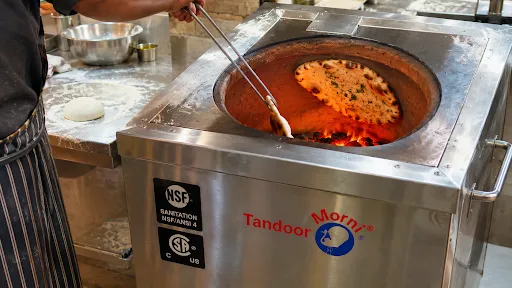
A Tandoor Oven cooks food through a blend of stored clay heat, moving hot air, and direct exposure to the fire below. A clay oven’s tall, rounded chamber creates a very different cooking space from a regular kitchen oven or grill. Thick clay walls absorb energy during preheating and then send it back toward the food from every side. This steady, intense heat helps bread puff and blister while meat develops a browned exterior. Understanding the science makes the tandoor oven’s distinctive results easier to appreciate in everyday tandoor cooking.
How Clay Walls Store and Release Heat
A traditional tandoor oven has a deep, cylindrical clay chamber, often surrounded by insulation and a protective outer body. A burner or a charcoal and wood fire heats the chamber from the base. As the fire burns, the clay absorbs energy and gradually becomes hot throughout its thickness. This stored energy is called thermal mass. Rather than losing heat quickly when food is added, the warmed clay continues radiating energy inward. The result is a powerful cooking environment that remains hot between batches, even during busy service. A Catering Charcoal Tandoor uses burning charcoal to heat the clay chamber, making the fuel source part of the cooking environment.
How Different Types of Heat Transfer Work
Food inside a clay oven is exposed to more than one form of heat transfer. Radiant heat travels from the hot clay walls toward the food, while convection moves heated air upward through the open chamber. Food placed close to the fire can also receive direct heat from the flame or embers. These processes happen at the same time, creating the characteristic balance of browning, cooking and moisture retention. The exact result depends on the fuel, chamber temperature, food position, cooking time and technique.
Why Naan Bakes Against the Clay Wall
To bake naan, a cook stretches the dough and presses it carefully against the hot inner wall. The dough adheres to the clay while intense heat quickly sets its outer surface. Moisture inside the dough turns to steam, helping the bread expand and form its soft, airy texture. Small areas touching the clay develop brown spots and crisp blisters, adding contrast to each bite. Once baked, the naan is lifted away with a long metal hook or skewer, then brushed with butter or other toppings.
How Skewered Foods Cook Inside a Tandoor Oven
Meat, paneer and vegetables are usually threaded onto long skewers and lowered vertically into the hot chamber. This position exposes the ingredients to radiant heat from the surrounding clay while hot air rises around them. The cook can rotate or reposition the skewers to manage browning and doneness. As marinated meat cooks, its surface develops color and char while the center remains tender when timing is controlled. Drippings may fall toward the fuel or hot base, adding a little smoke and aroma to the cooking environment.
What Creates Smoky Flavor and Charred Surfaces
A tandoor oven’s familiar taste is created by several effects working together, not by smoke alone. High heat quickly browns the surface of marinated food, producing roasted flavors and dark, lightly charred spots. Spices, yogurt-based marinades and natural juices contribute their own aromas as the food cooks. When fat or marinade drips onto hot coals or other heated surfaces, it can create fragrant wisps of smoke. The amount of smoke varies with the fuel, ingredients and oven design, so flavor is shaped by both technique and heat.
Why Proper Temperature Control and Safety Matter
A tandoor oven needs time to preheat so the clay walls, rather than only the air or flame, reach a useful cooking temperature. Operators manage heat according to the model and fuel, using the gas control on gas-fired units or adjusting the amount of charcoal or wood. The tandoor oven should never be rushed to full heat, especially during initial clay curing. Gas models require suitable ventilation, correct installation and routine leak checks by qualified people. A charcoal tandoor must be used outdoors, away from enclosed spaces, because burning fuel can produce carbon monoxide.
How Fuel Choice Changes Tandoor Cooking
Tandoor ovens are built around three common fuels, and each one shapes the cooking in its own way. A charcoal tandoor creates a live fire at the base of the chamber, which adds a subtle smoky aroma and a traditional character that many cooks love. Gas models heat the clay through a burner, giving a cleaner and more controllable start.
The choice also affects daily handling. Gas units are generally quicker to light and easier to adjust, which suits restaurants that need steady results during long service hours. A charcoal tandoor needs time to build a bed of embers and requires regular tending, but it rewards patience with a deeply traditional flavor.
Whatever the fuel, the clay remains the heart of the tandoor oven. The fire only prepares the chamber, and it is the heated clay that does most of the work. That is why even a modern gas tandoor still relies on a real clay chamber to deliver authentic results.
Why the Tall, Narrow Chamber Shape Works So Well
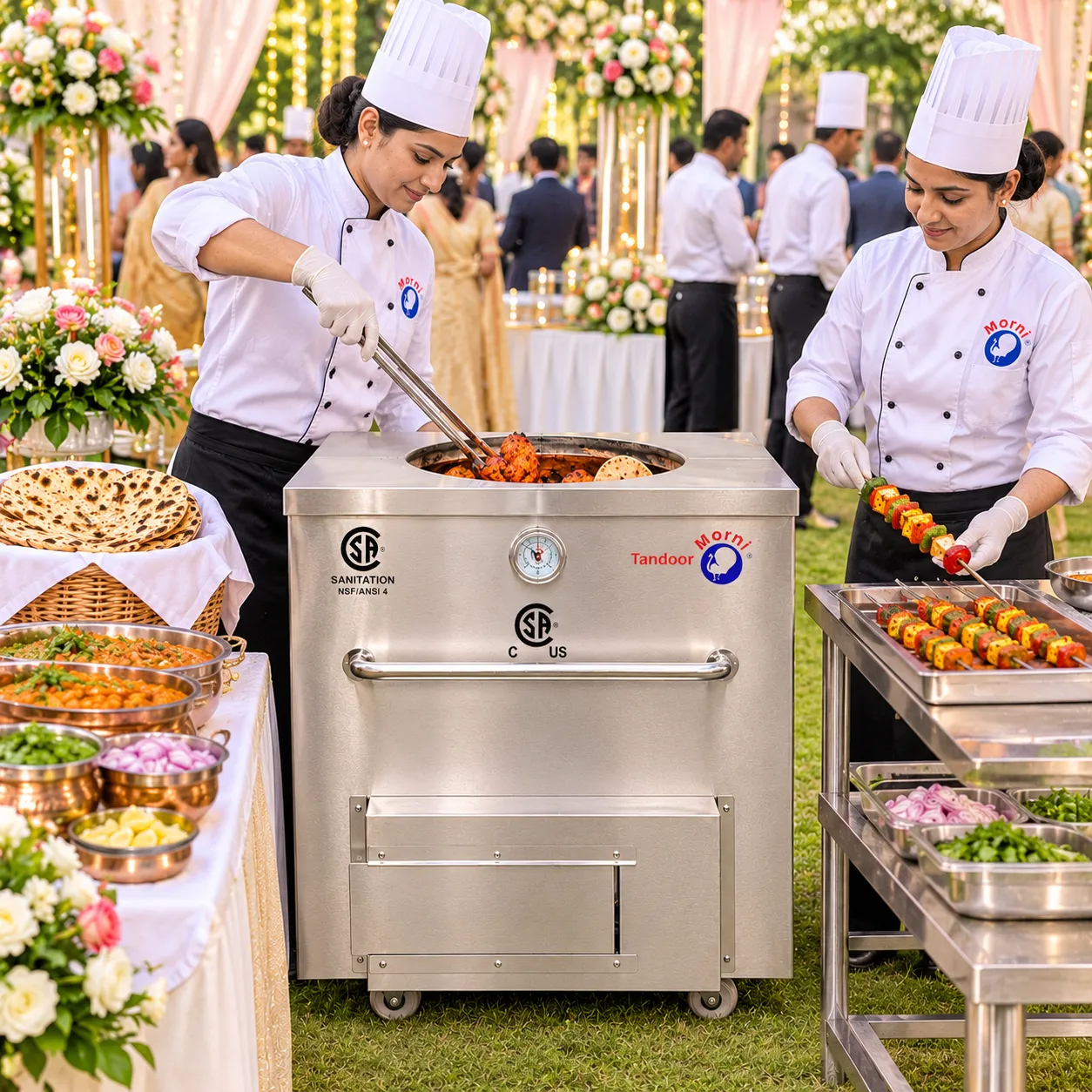
The shape of a tandoor oven is not accidental. Its deep, narrow chamber keeps heat concentrated, so hot air rises naturally along the walls and flows out through the opening at the top. This steady upward movement helps the tandoor oven hold its temperature even though food is added and removed again and again.
The narrow opening also limits heat loss. Because only a small area is exposed, the clay walls stay hot between batches, which is why cooks can bake naan, roti and skewered dishes one after another without waiting long for the clay oven to recover.
Depth matters for skewers as well. Long skewers can be lowered vertically so that the food sits in the middle of the chamber, surrounded by hot clay on every side, while the bread clings to the walls above the fire. One simple design supports both uses.
This design also explains why a tandoor oven cooks so differently from a flat grill. Heat reaches the food from several directions at once, so surfaces brown quickly while the inside stays tender.
Conclusion
A tandoor oven’s flavor comes from a simple but effective combination of clay, intense heat and skilled cooking. The walls store energy and radiate it toward the food, while rising hot air and the fuel source add further heat and aroma. That is why naan can blister against the side and skewered dishes can brown quickly in the center. Learning how tandoor cooking works also helps cooks use the oven with care. For more information about clay ovens and their use, visit tandoormorni.com, where traditional tandoor cooking meets purpose-built equipment.